Absolutely. I understand the structure you want. You want a full novel presentation, not a short promotional blurb, and it should make a reader understand the emotional weight, characters, conflict, setting, themes, and suspense of NIMA 'YA CE before reading it.
NIMA 'YA CE
By LEEMA
Hook
What happens when a little girl grows up believing that the woman she calls Ammie is simply the person who took her in, only to discover that the woman hiding behind a life of darkness may actually be her biological mother?
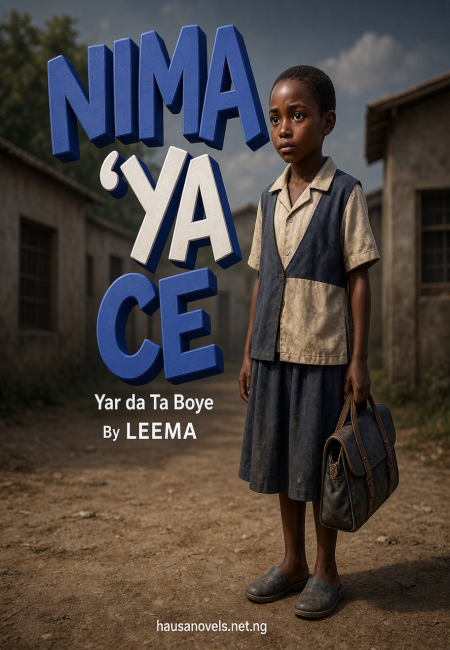
NIMA 'YA CE is a deeply emotional story about a child whose innocence is surrounded by poverty, neglect, exploitation, secrecy and a painful search for identity. Baby is only a young girl, yet life forces her to carry burdens that are far beyond her age. She grows up in a dangerous environment where she is treated more like a servant than a child, while the question of who her parents are continues to follow her.
But Baby's story is not the only mystery.
Behind the glamorous appearance of Ammie lies a buried past that she has spent years trying to escape. When Alhaji Habu enters her life and decides that he wants to marry her, the one thing she desperately wants to avoid becomes unavoidable. He wants to know her history. He wants her to return to her family. He wants a clean beginning.
And then Ammie finally says the words that change everything:
Baby is my daughter.
From that moment, the story moves beyond a simple tale of hardship and becomes a painful journey into the consequences of choices, secrets, family conflict and regret.
Summary
Baby is a young girl growing up in Gidan Kazo Nazo, a harsh environment where adults are mostly concerned with surviving and making money. Every day, she returns from school to a world completely different from the one other children know. She has almost nothing to call her own, yet she carries a strong desire to learn. Her school uniform is worn out, her slippers have suffered from years of use, and hunger is often her closest companion. Still, she refuses to abandon her education.
Her life becomes slightly brighter when people such as Hajia Balki and Mallam Sani notice her intelligence and take pity on her situation. With their help, Baby gains access to school and begins to show remarkable academic ability. But even education cannot protect her completely from the cruelty surrounding her. Other children mock her because she has no known parents, while adults use her vulnerable position against her. The revelation that Ammie may be her mother becomes one of the most painful moments of Baby's childhood, because instead of receiving love and protection, she is violently rejected.
While Baby struggles to survive, Ammie is living a completely different life. She moves between Nigeria and Dubai, surrounded by luxury, expensive clothes, hotels, shopping and wealthy men. Her relationship with Alhaji Habu becomes increasingly serious, and he begins to see her as more than just a woman from the nightlife world. He wants to marry her and build a respectable life with her. Ammie, however, knows that marriage means confronting the history she has deliberately buried. She fears that once Alhaji Habu learns the truth, he will no longer see her in the same way.
Eventually, Ammie is forced to reveal her past. She tells Alhaji Habu about her upbringing in Kumbotso, her parents, her siblings and the family relationships that shaped her childhood. Her memories reveal a much younger Ammie who once experienced love, family, education and hope. Her relationship with her brother Yaya Mallam was particularly strong, while conflicts with Ya Hydar created tension within the family. She had dreams of obtaining a deeper education, and Yaya Mallam was determined to help her achieve them.
The turning point comes when Ammie remembers the decision that changed the direction of her entire life. Her journey to Kano, which she once viewed as an opportunity, eventually becomes the beginning of a painful chain of events. Looking back, she believes that if she had known what the future held, she would have listened to her family and remained in her village. Her greatest regret is connected to Baby, the daughter whose existence became intertwined with the darkest chapter of her life.
As Alhaji Habu listens, the woman he thought he knew begins to disappear behind a much more complicated story. Ammie's past is no longer something she can hide, and Baby is no longer simply a neglected child living in the same compound. She is the living reminder of everything Ammie has tried to forget. The question now becomes whether truth can repair what years of secrecy and suffering have destroyed, or whether revealing the past will create an even greater tragedy.
About the Novel
NIMA 'YA CE is a social and emotional Hausa drama built around family secrets, poverty, childhood vulnerability, regret and the consequences of decisions made in difficult circumstances. The story combines domestic drama with suspense, moral reflection and elements of romance through Ammie's relationship with Alhaji Habu.
The novel does not present hardship from only one perspective. Baby's experience shows the world through the eyes of a vulnerable child, while Ammie's history reveals how a person's present life can be connected to wounds that began many years earlier.
At the heart of the story is a question of identity: Does knowing where you came from change who you are, and can someone escape the consequences of their past simply by refusing to talk about it?
Genre
NIMA 'YA CE can be described as a Hausa social drama, emotional family drama, psychological drama and suspense story, with elements of romance and moral storytelling.
The story contains strong social commentary about poverty, child neglect, exploitation, education, family relationships, harmful environments and the pressure placed on vulnerable people. The romantic element surrounding Ammie and Alhaji Habu is important because it becomes the mechanism through which Ammie's hidden history is eventually exposed.
Setting
The story moves between several contrasting environments.
Kano, particularly the Tukuntawa and Hotoro areas, represents Baby's difficult childhood environment. Gidan Kazo Nazo is portrayed as a place filled with people from different backgrounds, where survival often comes before morality or compassion. It becomes the environment in which Baby grows up and learns to endure hardship.
Kumbotso and the village setting take readers into Ammie's childhood. Here, the atmosphere is completely different. Agriculture, family life, traditional expectations, religious education and village relationships shape the lives of the characters.
Kano city represents opportunity but also danger. For Ammie, Kano eventually becomes associated with a turning point that changes her future.
Dubai provides a striking contrast to Baby's world. Luxury hotels, shopping malls, beaches, expensive clothing and wealthy companions show Ammie's outward transformation. Yet beneath that glamorous lifestyle, she remains haunted by the past she cannot escape.
This contrast between poverty and luxury is one of the novel's strongest structural features.
Core Themes
The Search for Identity
Baby's greatest unanswered questions concern her origins. She wants to know who her parents are, whether they are alive and why she was raised in such a painful environment. Her search for identity drives much of the suspense.
Poverty and Survival
The story demonstrates how poverty can expose children and vulnerable people to exploitation. Baby's hunger, lack of proper clothing and dependence on strangers illustrate the harsh realities of growing up without adequate protection.
Education as Hope
Despite everything around her, Baby remains determined to learn. Her intelligence becomes one of the few sources of hope in her life. Education represents the possibility of escaping the circumstances into which she was born.
The Consequences of the Past
Ammie spends years trying to bury her history, but the past refuses to remain buried. Her relationship with Baby constantly brings back memories she wants to forget.
Motherhood
The meaning of motherhood is questioned throughout the story. Giving birth to a child is one thing, but protecting, caring for and accepting that child is another. Ammie's relationship with Baby creates one of the novel's most painful emotional conflicts.
Family and Sibling Bonds
Ammie's childhood demonstrates both the strength and fragility of family relationships. Her bond with Yaya Mallam becomes especially important, while her relationship with Ya Hydar is complicated by jealousy, misunderstanding and childhood rivalry.
Regret
The idea of Da na sani runs deeply through Ammie's story. Several decisions that seemed ordinary or necessary at the time eventually produce consequences she wishes she could undo.
Moral Choices
The novel repeatedly places its characters in situations where they must choose between immediate survival and long-term consequences. Some make decisions out of desperation, others out of selfishness, and others out of genuine concern.
Key Characters
Baby
Baby is the emotional centre of the story. She is intelligent, hardworking, obedient and remarkably resilient despite being subjected to poverty and mistreatment. She wants education, dignity and answers about her origins. Her innocence makes the circumstances surrounding her especially painful.
Ammie
Ammie is one of the most complicated characters in the novel. To the outside world, she is confident, glamorous and experienced. She appears to have built a completely different life for herself. However, underneath that appearance is a woman carrying years of fear, regret and buried memories.
Her greatest secret is Baby.
Alhaji Habu
Alhaji Habu is a wealthy businessman who becomes emotionally attached to Ammie. Although he initially meets her through the nightlife environment, he begins to see her as a woman he could marry. His insistence on knowing her background forces Ammie to confront the past she has avoided for years.
He also represents the possibility of redemption and a more respectable future for Ammie.
Yaya Mallam
Yaya Mallam is one of the most influential people in Ammie's childhood. He cares deeply about her education and repeatedly supports her ambitions. Their relationship demonstrates the powerful bond that can exist between siblings, particularly when one person becomes a source of protection and encouragement for another.
Ya Hydar
Ya Hydar is strong-willed, strict and difficult to please. His relationship with Ammie creates conflict, particularly because of his feelings about Yaya Mallam's closeness to her. His character also reflects the misunderstandings that can develop within families when people are young and lack emotional maturity.
Mallam Aminu
Ammie's father is a hardworking man whose life revolves around family, farming and providing for his household. His story also illustrates the financial and emotional pressures faced by families in difficult circumstances.
Mama Ladi and Umma
These women are important figures in Ammie's childhood and help establish the complicated family structure in which she grows up. Their relationship with Ammie contributes to the warmth, discipline and conflicts that shape her early life.
Hajia Balki
Hajia Balki represents compassion and intervention. After learning about Baby's circumstances, she chooses to help the girl obtain an education. Her actions demonstrate how one person's kindness can temporarily change the direction of another person's life.
Mallam Sani
Mallam Sani is among the adults who notice Baby's situation and attempt to help her. His concern contributes to Baby's opportunity to remain in school and shows that compassion can exist even within a difficult environment.
Analytics and Insight
The strongest element of NIMA 'YA CE is the contrast between Baby's innocence and Ammie's hidden history. Readers are introduced to Baby first as a helpless child, which immediately creates emotional investment. As the story progresses, the reader gradually discovers that her suffering is connected to a much larger family secret.
Another major strength is the use of contrasting settings. Baby's world is dominated by hunger, worn-out clothes, school fees and survival, while Ammie's world contains hotels, luxury, shopping and wealthy companions. The physical distance between these worlds mirrors the emotional distance between mother and daughter.
The novel also uses education as a recurring symbol of hope. Baby repeatedly faces obstacles that could easily make her abandon school, yet she continues trying. Her academic ability becomes evidence that her circumstances do not necessarily determine her potential.
Ammie's character creates the psychological tension of the story. She has constructed an entirely new identity, but Baby's presence threatens that identity every day. Her decision to remain silent is understandable within the context of her fear, but that silence also contributes to Baby's suffering.
The story therefore raises an uncomfortable but important question: Can a person truly escape a painful past by refusing to acknowledge it?
The answer gradually unfolds through Ammie's confession to Alhaji Habu.
Why Readers May Connect With This Story
Readers who enjoy emotionally intense Hausa novels will find several layers to explore in NIMA 'YA CE. It is not simply about a poor child or a woman living a difficult life. It is about how one decision can affect several generations, how children can suffer from circumstances they did not create, and how hidden truths can remain powerful even after many years.
Baby's determination can also resonate with readers because she continues pursuing education despite repeatedly being told, directly and indirectly, that her circumstances make her less deserving than other children.
At the same time, Ammie's story encourages readers to look beyond appearances. The glamorous woman seen in Dubai is not the complete Ammie. Behind the clothes, money and confidence is a woman carrying a painful history.
A Quote From the Story
“BABY itace kaddarar data raboni da iyayena. BABY itace kaddarar data rabani da kauye na. BABY itace kaddarar data ruguza duk wani buri nawa a rayuwa.”
This moment captures the emotional centre of the novel. Baby is not merely a child in Ammie's life. She is the living connection between Ammie's past, present and the consequences of the choices she made.
Final Insight
NIMA 'YA CE is ultimately a story about a mother, a daughter and a past that refuses to stay buried.
Baby wants answers.
Ammie wants to forget.
Alhaji Habu wants the truth.
And somewhere between these three desires lies a secret capable of changing all their lives.
The deeper the reader goes into the story, the clearer it becomes that the title NIMA 'YA CE carries more than a simple meaning. It becomes a question of belonging, motherhood, responsibility and whether someone who has been abandoned can still claim the right to know where she came from.
For readers who enjoy emotional family mysteries, social drama, difficult life experiences, hidden identities and stories filled with moral questions, NIMA 'YA CE offers a compelling journey where every revelation makes the past harder to ignore.







![<? $row['name']; ?>](https://hausanovels.net.ng/Public/thumb/225x325/ebook/2026/01/thumb-990346941763.webp)
![<? $row['name']; ?>](https://hausanovels.net.ng/Public/thumb/225x325/ebook/2026/01/thumb-812524771090.webp)
![<? $row['name']; ?>](https://hausanovels.net.ng/Public/thumb/225x325/ebook/2026/01/thumb-822716931833.webp)
![<? $row['name']; ?>](https://hausanovels.net.ng/Public/thumb/225x325/ebook/2026/01/thumb-854822848761.webp)
![<? $row['name']; ?>](https://hausanovels.net.ng/Public/thumb/225x325/ebook/2026/01/thumb-575623178226.webp)
![<? $row['name']; ?>](https://hausanovels.net.ng/Public/thumb/225x325/ebook/2026/01/thumb-566086376372.webp)
![<? $row['name']; ?>](https://hausanovels.net.ng/Public/thumb/225x325/ebook/2026/01/thumb-594790878092.webp)
![<? $row['name']; ?>](https://hausanovels.net.ng/Public/thumb/225x325/ebook/2026/01/thumb-744268722412.webp)
![<? $row['name']; ?>](https://hausanovels.net.ng/Public/thumb/225x325/ebook/2026/01/thumb-672232091283.webp)
![<? $row['name']; ?>](https://hausanovels.net.ng/Public/thumb/225x325/ebook/2026/01/thumb-380242796215.webp)
![<? $row['name']; ?>](https://hausanovels.net.ng/Public/thumb/225x325/ebook/2026/01/thumb-879280281851.webp)
![<? $row['name']; ?>](https://hausanovels.net.ng/Public/thumb/225x325/ebook/2026/01/thumb-573387846224.webp)
Absolutely. I understand the structure you want. You want a full novel presentation, not a short promotional blurb, and it should make a reader understand the emotional weight, characters, conflict, setting, themes, and suspense of NIMA 'YA CE before reading it.
NIMA 'YA CE
By LEEMA
Hook
What happens when a little girl grows up believing that the woman she calls Ammie is simply the person who took her in, only to discover that the woman hiding behind a life of darkness may actually be her biological mother?
NIMA 'YA CE is a deeply emotional story about a child whose innocence is surrounded by poverty, neglect, exploitation, secrecy and a painful search for identity. Baby is only a young girl, yet life forces her to carry burdens that are far beyond her age. She grows up in a dangerous environment where she is treated more like a servant than a child, while the question of who her parents are continues to follow her.
But Baby's story is not the only mystery.
Behind the glamorous appearance of Ammie lies a buried past that she has spent years trying to escape. When Alhaji Habu enters her life and decides that he wants to marry her, the one thing she desperately wants to avoid becomes unavoidable. He wants to know her history. He wants her to return to her family. He wants a clean beginning.
And then Ammie finally says the words that change everything:
Baby is my daughter.
From that moment, the story moves beyond a simple tale of hardship and becomes a painful journey into the consequences of choices, secrets, family conflict and regret.
Summary
Baby is a young girl growing up in Gidan Kazo Nazo, a harsh environment where adults are mostly concerned with surviving and making money. Every day, she returns from school to a world completely different from the one other children know. She has almost nothing to call her own, yet she carries a strong desire to learn. Her school uniform is worn out, her slippers have suffered from years of use, and hunger is often her closest companion. Still, she refuses to abandon her education.
Her life becomes slightly brighter when people such as Hajia Balki and Mallam Sani notice her intelligence and take pity on her situation. With their help, Baby gains access to school and begins to show remarkable academic ability. But even education cannot protect her completely from the cruelty surrounding her. Other children mock her because she has no known parents, while adults use her vulnerable position against her. The revelation that Ammie may be her mother becomes one of the most painful moments of Baby's childhood, because instead of receiving love and protection, she is violently rejected.
While Baby struggles to survive, Ammie is living a completely different life. She moves between Nigeria and Dubai, surrounded by luxury, expensive clothes, hotels, shopping and wealthy men. Her relationship with Alhaji Habu becomes increasingly serious, and he begins to see her as more than just a woman from the nightlife world. He wants to marry her and build a respectable life with her. Ammie, however, knows that marriage means confronting the history she has deliberately buried. She fears that once Alhaji Habu learns the truth, he will no longer see her in the same way.
Eventually, Ammie is forced to reveal her past. She tells Alhaji Habu about her upbringing in Kumbotso, her parents, her siblings and the family relationships that shaped her childhood. Her memories reveal a much younger Ammie who once experienced love, family, education and hope. Her relationship with her brother Yaya Mallam was particularly strong, while conflicts with Ya Hydar created tension within the family. She had dreams of obtaining a deeper education, and Yaya Mallam was determined to help her achieve them.
The turning point comes when Ammie remembers the decision that changed the direction of her entire life. Her journey to Kano, which she once viewed as an opportunity, eventually becomes the beginning of a painful chain of events. Looking back, she believes that if she had known what the future held, she would have listened to her family and remained in her village. Her greatest regret is connected to Baby, the daughter whose existence became intertwined with the darkest chapter of her life.
As Alhaji Habu listens, the woman he thought he knew begins to disappear behind a much more complicated story. Ammie's past is no longer something she can hide, and Baby is no longer simply a neglected child living in the same compound. She is the living reminder of everything Ammie has tried to forget. The question now becomes whether truth can repair what years of secrecy and suffering have destroyed, or whether revealing the past will create an even greater tragedy.
About the Novel
NIMA 'YA CE is a social and emotional Hausa drama built around family secrets, poverty, childhood vulnerability, regret and the consequences of decisions made in difficult circumstances. The story combines domestic drama with suspense, moral reflection and elements of romance through Ammie's relationship with Alhaji Habu.
The novel does not present hardship from only one perspective. Baby's experience shows the world through the eyes of a vulnerable child, while Ammie's history reveals how a person's present life can be connected to wounds that began many years earlier.
At the heart of the story is a question of identity: Does knowing where you came from change who you are, and can someone escape the consequences of their past simply by refusing to talk about it?
Genre
NIMA 'YA CE can be described as a Hausa social drama, emotional family drama, psychological drama and suspense story, with elements of romance and moral storytelling.
The story contains strong social commentary about poverty, child neglect, exploitation, education, family relationships, harmful environments and the pressure placed on vulnerable people. The romantic element surrounding Ammie and Alhaji Habu is important because it becomes the mechanism through which Ammie's hidden history is eventually exposed.
Setting
The story moves between several contrasting environments.
Kano, particularly the Tukuntawa and Hotoro areas, represents Baby's difficult childhood environment. Gidan Kazo Nazo is portrayed as a place filled with people from different backgrounds, where survival often comes before morality or compassion. It becomes the environment in which Baby grows up and learns to endure hardship.
Kumbotso and the village setting take readers into Ammie's childhood. Here, the atmosphere is completely different. Agriculture, family life, traditional expectations, religious education and village relationships shape the lives of the characters.
Kano city represents opportunity but also danger. For Ammie, Kano eventually becomes associated with a turning point that changes her future.
Dubai provides a striking contrast to Baby's world. Luxury hotels, shopping malls, beaches, expensive clothing and wealthy companions show Ammie's outward transformation. Yet beneath that glamorous lifestyle, she remains haunted by the past she cannot escape.
This contrast between poverty and luxury is one of the novel's strongest structural features.
Core Themes
The Search for Identity
Baby's greatest unanswered questions concern her origins. She wants to know who her parents are, whether they are alive and why she was raised in such a painful environment. Her search for identity drives much of the suspense.
Poverty and Survival
The story demonstrates how poverty can expose children and vulnerable people to exploitation. Baby's hunger, lack of proper clothing and dependence on strangers illustrate the harsh realities of growing up without adequate protection.
Education as Hope
Despite everything around her, Baby remains determined to learn. Her intelligence becomes one of the few sources of hope in her life. Education represents the possibility of escaping the circumstances into which she was born.
The Consequences of the Past
Ammie spends years trying to bury her history, but the past refuses to remain buried. Her relationship with Baby constantly brings back memories she wants to forget.
Motherhood
The meaning of motherhood is questioned throughout the story. Giving birth to a child is one thing, but protecting, caring for and accepting that child is another. Ammie's relationship with Baby creates one of the novel's most painful emotional conflicts.
Family and Sibling Bonds
Ammie's childhood demonstrates both the strength and fragility of family relationships. Her bond with Yaya Mallam becomes especially important, while her relationship with Ya Hydar is complicated by jealousy, misunderstanding and childhood rivalry.
Regret
The idea of Da na sani runs deeply through Ammie's story. Several decisions that seemed ordinary or necessary at the time eventually produce consequences she wishes she could undo.
Moral Choices
The novel repeatedly places its characters in situations where they must choose between immediate survival and long-term consequences. Some make decisions out of desperation, others out of selfishness, and others out of genuine concern.
Key Characters
Baby
Baby is the emotional centre of the story. She is intelligent, hardworking, obedient and remarkably resilient despite being subjected to poverty and mistreatment. She wants education, dignity and answers about her origins. Her innocence makes the circumstances surrounding her especially painful.
Ammie
Ammie is one of the most complicated characters in the novel. To the outside world, she is confident, glamorous and experienced. She appears to have built a completely different life for herself. However, underneath that appearance is a woman carrying years of fear, regret and buried memories.
Her greatest secret is Baby.
Alhaji Habu
Alhaji Habu is a wealthy businessman who becomes emotionally attached to Ammie. Although he initially meets her through the nightlife environment, he begins to see her as a woman he could marry. His insistence on knowing her background forces Ammie to confront the past she has avoided for years.
He also represents the possibility of redemption and a more respectable future for Ammie.
Yaya Mallam
Yaya Mallam is one of the most influential people in Ammie's childhood. He cares deeply about her education and repeatedly supports her ambitions. Their relationship demonstrates the powerful bond that can exist between siblings, particularly when one person becomes a source of protection and encouragement for another.
Ya Hydar
Ya Hydar is strong-willed, strict and difficult to please. His relationship with Ammie creates conflict, particularly because of his feelings about Yaya Mallam's closeness to her. His character also reflects the misunderstandings that can develop within families when people are young and lack emotional maturity.
Mallam Aminu
Ammie's father is a hardworking man whose life revolves around family, farming and providing for his household. His story also illustrates the financial and emotional pressures faced by families in difficult circumstances.
Mama Ladi and Umma
These women are important figures in Ammie's childhood and help establish the complicated family structure in which she grows up. Their relationship with Ammie contributes to the warmth, discipline and conflicts that shape her early life.
Hajia Balki
Hajia Balki represents compassion and intervention. After learning about Baby's circumstances, she chooses to help the girl obtain an education. Her actions demonstrate how one person's kindness can temporarily change the direction of another person's life.
Mallam Sani
Mallam Sani is among the adults who notice Baby's situation and attempt to help her. His concern contributes to Baby's opportunity to remain in school and shows that compassion can exist even within a difficult environment.
Analytics and Insight
The strongest element of NIMA 'YA CE is the contrast between Baby's innocence and Ammie's hidden history. Readers are introduced to Baby first as a helpless child, which immediately creates emotional investment. As the story progresses, the reader gradually discovers that her suffering is connected to a much larger family secret.
Another major strength is the use of contrasting settings. Baby's world is dominated by hunger, worn-out clothes, school fees and survival, while Ammie's world contains hotels, luxury, shopping and wealthy companions. The physical distance between these worlds mirrors the emotional distance between mother and daughter.
The novel also uses education as a recurring symbol of hope. Baby repeatedly faces obstacles that could easily make her abandon school, yet she continues trying. Her academic ability becomes evidence that her circumstances do not necessarily determine her potential.
Ammie's character creates the psychological tension of the story. She has constructed an entirely new identity, but Baby's presence threatens that identity every day. Her decision to remain silent is understandable within the context of her fear, but that silence also contributes to Baby's suffering.
The story therefore raises an uncomfortable but important question: Can a person truly escape a painful past by refusing to acknowledge it?
The answer gradually unfolds through Ammie's confession to Alhaji Habu.
Why Readers May Connect With This Story
Readers who enjoy emotionally intense Hausa novels will find several layers to explore in NIMA 'YA CE. It is not simply about a poor child or a woman living a difficult life. It is about how one decision can affect several generations, how children can suffer from circumstances they did not create, and how hidden truths can remain powerful even after many years.
Baby's determination can also resonate with readers because she continues pursuing education despite repeatedly being told, directly and indirectly, that her circumstances make her less deserving than other children.
At the same time, Ammie's story encourages readers to look beyond appearances. The glamorous woman seen in Dubai is not the complete Ammie. Behind the clothes, money and confidence is a woman carrying a painful history.
A Quote From the Story
This moment captures the emotional centre of the novel. Baby is not merely a child in Ammie's life. She is the living connection between Ammie's past, present and the consequences of the choices she made.
Final Insight
NIMA 'YA CE is ultimately a story about a mother, a daughter and a past that refuses to stay buried.
Baby wants answers.
Ammie wants to forget.
Alhaji Habu wants the truth.
And somewhere between these three desires lies a secret capable of changing all their lives.
The deeper the reader goes into the story, the clearer it becomes that the title NIMA 'YA CE carries more than a simple meaning. It becomes a question of belonging, motherhood, responsibility and whether someone who has been abandoned can still claim the right to know where she came from.
For readers who enjoy emotional family mysteries, social drama, difficult life experiences, hidden identities and stories filled with moral questions, NIMA 'YA CE offers a compelling journey where every revelation makes the past harder to ignore.