In a society where people are increasingly drawn to foreign lifestyles, appearances, and modern trends, the line between personal freedom and cultural identity becomes dangerously thin. Some people change themselves to fit into the world around them, while others struggle to preserve the values they were raised with. But what happens when these differences begin to affect families, marriages, friendships, and the future of an entire generation? In AL'ADUN WASU, Batul Mamman (Mrs) explores the consequences of borrowed traditions, misplaced priorities, family conflicts, and the difficult choices that shape people's lives. Beneath its humour, everyday conversations, and familiar domestic scenes lies a compelling story about identity, upbringing, education, faith, and the price people sometimes pay for following the crowd.
At the centre of the story is Fatima Bashir, popularly known as Zuhra, a young woman whose lively personality makes her difficult to ignore. She is outspoken, playful, mischievous, and capable of turning even a serious conversation into an opportunity for laughter. Unfortunately, her academic performance is far less impressive than her confidence. Despite her father's determination to see her succeed, Zuhra struggles with her examinations and repeatedly fails to achieve the results needed to move forward. Her father, Mal Bashir Ibrahim, has sacrificed much to provide her with an education, making her repeated disappointments particularly painful. He wants a better future for his daughter, but Zuhra seems more interested in finding an easier alternative than facing the challenges before her. Her suggestion that she should abandon the struggle and learn a trade, or simply get married, reveals the frustration of a young woman who has not yet discovered what she is capable of achieving. Yet behind her amusing remarks and stubborn behaviour is a deeper story about parental expectations, self-awareness, and the struggle to find one's place in life.
Mal Bashir is not a father whose expectations come from privilege. His own educational journey was interrupted when family responsibilities forced him to leave school and help on his father's farm. Although he eventually established himself as a carpenter, the experience left him with an understanding of how limited opportunities can shape a person's future. He does not want his daughter to face the same restrictions, which explains his determination to keep her in school despite her disappointing results. His frustrations, however, often erupt in anger and harsh words, creating moments that are both humorous and emotionally revealing. Through his relationship with Zuhra, the story examines the complicated nature of parenting, where love and sacrifice sometimes become entangled with disappointment, impatience, and the desire to control a child's future. His wife, Atine, offers another perspective on family life, balancing the pressures of raising their daughter with the everyday demands of running a household. Their modest circumstances make the little things in life particularly meaningful, and one of the story's most touching moments emerges when Zuhra discovers just how deeply her parents care for her. What initially appears to be an ordinary family meal becomes a quiet revelation about sacrifice, gratitude, and the love that often goes unspoken.
Zuhra's relationship with her friend Hajara introduces another important dimension to the narrative. The two young women share a familiar friendship filled with teasing, disagreements, laughter, and the occasional quarrel. However, their differences become increasingly apparent as Hajara prepares for marriage and begins experimenting with beauty practices such as hair extensions and skin bleaching. Eager to improve her appearance before her wedding, she becomes caught between the desire to look fashionable and the values she has been taught. Zuhra, despite her own imperfections, challenges her friend's choices and warns her about the consequences of changing herself merely to satisfy social expectations. Their arguments are entertaining, but they also expose a serious question: how easily can the desire to impress others lead someone away from the principles they once considered important? Hajara's experiences within her extended family further complicate the issue, as her choices provoke criticism, embarrassment, and conflict. The story uses these encounters to explore the pressure young women face to meet changing beauty standards, particularly when marriage and public opinion become powerful influences on their decisions.
As the narrative expands beyond Zuhra's immediate surroundings, the consequences of cultural change become even more pronounced. Another family struggles with the influence of foreign lifestyles on its younger generation, particularly through Hamza and his wife, Izzatu. Their children, Hamida and Adabiyya, become involved in plans for a wedding anniversary celebration that raises serious concerns among their elders. The revealing outfits selected for the occasion, the secrecy surrounding the preparations, and the apparent willingness to imitate practices that conflict with their family's religious and cultural expectations expose a growing divide between generations. Their grandmother, Hajiya Halima, and Mama Kaltume are troubled not simply by the celebration itself, but by what they believe it represents: a gradual abandonment of familiar values in favour of lifestyles they consider unsuitable. Hamza's own circumstances reveal how complicated this divide can become. A successful architect with professional responsibilities and international business interests, he finds himself caught between his work, his wife, his children, and the expectations of his family. When an urgent family situation distracts him during an important business meeting, he signs a damaging agreement without properly understanding its terms. The mistake threatens his company's financial interests and demonstrates how a moment of distraction can create consequences far beyond what anyone anticipates. His predicament adds suspense to the narrative while connecting family pressures with the responsibilities and risks of professional life.
The story also reaches into the painful history of Kaltume, whose experience exposes the destructive power of jealousy, false accusations, and social rejection. Once a woman whose marriage was marked by humiliation and emotional suffering, she becomes the victim of circumstances manipulated by those closest to her. A devastating accusation destroys her relationship with her husband, damages her reputation, and leaves her isolated from people who once knew her. Her ordeal reveals how quickly public opinion can turn against an innocent person and how difficult it can be to recover when a false story becomes accepted as truth. Halima's compassion offers a path towards healing, demonstrating the value of kindness when someone has been abandoned by the people who should have protected them. Through Kaltume's history, the novel moves beyond the lighter conflicts of everyday life and examines the lasting consequences of betrayal, prejudice, and the failure to seek the truth before passing judgment. Her story also adds emotional depth to the relationships connecting the older generation, suggesting that the choices made by adults can leave lasting impressions on the families they build.
AL'ADUN WASU is a family drama that blends humour, social commentary, domestic conflict, and moral reflection. Its settings include the familiar neighbourhoods and homes of Kano, the ordinary routines of family life, educational environments, religious gatherings, and the professional world of business and architecture. These different settings allow the narrative to move naturally between the concerns of young people and the anxieties of their elders. One moment, the reader encounters Zuhra's amusing attempts to escape her father's criticism; the next, the story confronts the painful consequences of marital betrayal or the risks created by decisions made under pressure. This contrast gives the novel a recognisable human quality, reflecting how real families can experience laughter and disappointment, affection and resentment, within the same household.
The novel's central themes include cultural identity, religious values, generational conflict, parental sacrifice, education, friendship, beauty standards, marriage, betrayal, and personal responsibility. Its exploration of borrowed customs raises questions about the difference between appreciating other cultures and adopting practices without considering their implications. Through Zuhra and Hajara, it examines the influence of peer pressure and appearance on young women's decisions. Through Mal Bashir, it highlights the hopes and frustrations of parents who want their children to enjoy opportunities they themselves never received. Through Hamza's family, it considers the difficulties that arise when different generations disagree about acceptable behaviour, while Kaltume's experience illustrates the devastating effects of false accusations and misplaced trust. Faith and moral accountability also run throughout the narrative, particularly in discussions about personal choices, religious teachings, and the responsibility to distinguish between genuine progress and the uncritical imitation of others.
Zuhra is one of the novel's most distinctive characters because her flaws are as visible as her charm. Her humour, stubbornness, and apparent lack of academic ambition make her entertaining, but her interactions with her parents reveal a young woman who is still learning to understand responsibility and the sacrifices made on her behalf. Mal Bashir represents parental determination shaped by personal hardship, while Atine brings warmth and a quieter form of maternal concern to their household. Hajara serves as a contrasting figure whose desire to improve her appearance exposes her vulnerability to social expectations. Halima and Kaltume provide an older generation's perspective on family loyalty, compassion, and the consequences of suffering in silence. Hamza and Izzatu, meanwhile, represent the complexities of modern family life, where professional ambition, personal preferences, and competing cultural expectations can create tensions that affect everyone around them. Together, these characters form an interconnected portrait of people attempting to navigate a changing society while confronting the consequences of their own decisions.
One of the novel's greatest strengths is its use of everyday humour to introduce subjects that might otherwise feel confrontational. Zuhra's playful arguments, her father's exasperation, and the familiar exchanges between friends give the story a lively rhythm. These moments make the characters approachable and provide relief from the more serious conflicts that emerge later. However, the humour also serves a deeper purpose: it exposes the contradictions between what people claim to believe and how they actually behave. Zuhra may struggle academically, yet she sometimes recognises problems that others overlook. Hajara may believe that changing her appearance will improve her prospects, but her choices bring unexpected embarrassment and family tension. Hamza may be professionally accomplished, yet a moment of carelessness threatens his business. Such contrasts encourage readers to look beyond outward appearances and consider the reasoning, pressures, and weaknesses behind people's actions.
The narrative also invites reflection on how families respond when their members make mistakes. Some characters attempt to correct others through advice, while others rely on anger, criticism, or public embarrassment. The consequences are not always straightforward, and the novel leaves room for readers to consider whether good intentions are enough when the methods used to express them cause further distress. Its treatment of education similarly raises an important question about how young people should respond when they struggle to meet conventional expectations. Zuhra's difficulties challenge her father's hopes, but they also point towards the need to understand a person's abilities, limitations, and interests rather than assuming that every individual will follow the same path to success. Meanwhile, the experiences of Kaltume and Hamza demonstrate that intelligence, experience, and social standing cannot always protect people from mistakes, manipulation, or the consequences of misplaced trust.
Ultimately, AL'ADUN WASU offers more than a collection of family disagreements and amusing encounters. It presents a world in which the choices people make about education, appearance, marriage, faith, and cultural identity can influence not only their own lives but also the people who depend on them. Beneath the everyday conversations lies a persistent tension between tradition and change, between personal desires and collective expectations, and between the image people wish to present and the truth they must eventually confront. Readers who enjoy Hausa family dramas with relatable characters, moral questions, humour, emotional conflict, and interconnected storylines will find plenty to engage with. The novel's appeal lies in its ability to move from lighthearted domestic scenes to situations involving betrayal, financial risk, and damaged relationships, reminding readers that serious consequences can emerge from decisions that initially seem small.
A thematic line inspired by the novel: “Not every new way of life is progress, and not every familiar tradition is understood until its absence is felt.”
With its blend of comedy, family tension, cultural reflection, and emotional revelations, AL'ADUN WASU invites readers to look more closely at the influences shaping their lives. It asks them to consider what should be preserved, what deserves careful reconsideration, and what happens when the desire to belong becomes stronger than the wisdom to choose carefully. As the characters confront their personal struggles and the consequences of their decisions, one question remains at the heart of the story: when the customs of others begin to reshape a family, who will recognise the danger before the damage becomes impossible to undo?

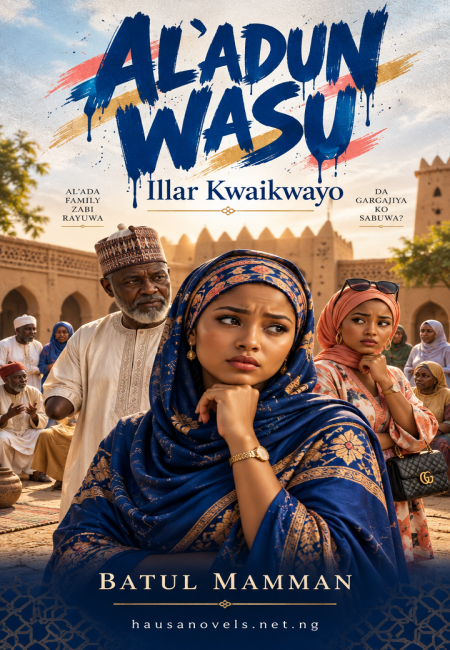











AL`ADUN WASU Illar Kwaikwayo
by Batul Mamman
A Glimpse:
In a society where people are increasingly drawn to foreign lifestyles, appearances, and modern trends, the line between personal freedom and cultural identity becomes dangerously thin. Some people change themselves to fit into the world around them, while others struggle to preserve the values they were raised with. But what happens when these differences begin to affect families, marriages, friendships, and the future of an entire generation? In AL'ADUN WASU, Batul Mamman (Mrs) explores the consequences of borrowed traditions, misplaced priorities, family conflicts, and the difficult choices that shape people's lives. Beneath its humour, everyday conversations, and familiar domestic scenes lies a compelling story about identity, upbringing, education, faith, and the price people sometimes pay for following the crowd.
At the centre of the story is Fatima Bashir, popularly known as Zuhra, a young woman whose lively personality makes her difficult to ignore. She is outspoken, playful, mischievous, and capable of turning even a serious conversation into an opportunity for laughter. Unfortunately, her academic performance is far less impressive than her confidence. Despite her father's determination to see her succeed, Zuhra struggles with her examinations and repeatedly fails to achieve the results needed to move forward. Her father, Mal Bashir Ibrahim, has sacrificed much to provide her with an education, making her repeated disappointments particularly painful. He wants a better future for his daughter, but Zuhra seems more interested in finding an easier alternative than facing the challenges before her. Her suggestion that she should abandon the struggle and learn a trade, or simply get married, reveals the frustration of a young woman who has not yet discovered what she is capable of achieving. Yet behind her amusing remarks and stubborn behaviour is a deeper story about parental expectations, self-awareness, and the struggle to find one's place in life.
Mal Bashir is not a father whose expectations come from privilege. His own educational journey was interrupted when family responsibilities forced him to leave school and help on his father's farm. Although he eventually established himself as a carpenter, the experience left him with an understanding of how limited opportunities can shape a person's future. He does not want his daughter to face the same restrictions, which explains his determination to keep her in school despite her disappointing results. His frustrations, however, often erupt in anger and harsh words, creating moments that are both humorous and emotionally revealing. Through his relationship with Zuhra, the story examines the complicated nature of parenting, where love and sacrifice sometimes become entangled with disappointment, impatience, and the desire to control a child's future. His wife, Atine, offers another perspective on family life, balancing the pressures of raising their daughter with the everyday demands of running a household. Their modest circumstances make the little things in life particularly meaningful, and one of the story's most touching moments emerges when Zuhra discovers just how deeply her parents care for her. What initially appears to be an ordinary family meal becomes a quiet revelation about sacrifice, gratitude, and the love that often goes unspoken.
Zuhra's relationship with her friend Hajara introduces another important dimension to the narrative. The two young women share a familiar friendship filled with teasing, disagreements, laughter, and the occasional quarrel. However, their differences become increasingly apparent as Hajara prepares for marriage and begins experimenting with beauty practices such as hair extensions and skin bleaching. Eager to improve her appearance before her wedding, she becomes caught between the desire to look fashionable and the values she has been taught. Zuhra, despite her own imperfections, challenges her friend's choices and warns her about the consequences of changing herself merely to satisfy social expectations. Their arguments are entertaining, but they also expose a serious question: how easily can the desire to impress others lead someone away from the principles they once considered important? Hajara's experiences within her extended family further complicate the issue, as her choices provoke criticism, embarrassment, and conflict. The story uses these encounters to explore the pressure young women face to meet changing beauty standards, particularly when marriage and public opinion become powerful influences on their decisions.
As the narrative expands beyond Zuhra's immediate surroundings, the consequences of cultural change become even more pronounced. Another family struggles with the influence of foreign lifestyles on its younger generation, particularly through Hamza and his wife, Izzatu. Their children, Hamida and Adabiyya, become involved in plans for a wedding anniversary celebration that raises serious concerns among their elders. The revealing outfits selected for the occasion, the secrecy surrounding the preparations, and the apparent willingness to imitate practices that conflict with their family's religious and cultural expectations expose a growing divide between generations. Their grandmother, Hajiya Halima, and Mama Kaltume are troubled not simply by the celebration itself, but by what they believe it represents: a gradual abandonment of familiar values in favour of lifestyles they consider unsuitable. Hamza's own circumstances reveal how complicated this divide can become. A successful architect with professional responsibilities and international business interests, he finds himself caught between his work, his wife, his children, and the expectations of his family. When an urgent family situation distracts him during an important business meeting, he signs a damaging agreement without properly understanding its terms. The mistake threatens his company's financial interests and demonstrates how a moment of distraction can create consequences far beyond what anyone anticipates. His predicament adds suspense to the narrative while connecting family pressures with the responsibilities and risks of professional life.
The story also reaches into the painful history of Kaltume, whose experience exposes the destructive power of jealousy, false accusations, and social rejection. Once a woman whose marriage was marked by humiliation and emotional suffering, she becomes the victim of circumstances manipulated by those closest to her. A devastating accusation destroys her relationship with her husband, damages her reputation, and leaves her isolated from people who once knew her. Her ordeal reveals how quickly public opinion can turn against an innocent person and how difficult it can be to recover when a false story becomes accepted as truth. Halima's compassion offers a path towards healing, demonstrating the value of kindness when someone has been abandoned by the people who should have protected them. Through Kaltume's history, the novel moves beyond the lighter conflicts of everyday life and examines the lasting consequences of betrayal, prejudice, and the failure to seek the truth before passing judgment. Her story also adds emotional depth to the relationships connecting the older generation, suggesting that the choices made by adults can leave lasting impressions on the families they build.
AL'ADUN WASU is a family drama that blends humour, social commentary, domestic conflict, and moral reflection. Its settings include the familiar neighbourhoods and homes of Kano, the ordinary routines of family life, educational environments, religious gatherings, and the professional world of business and architecture. These different settings allow the narrative to move naturally between the concerns of young people and the anxieties of their elders. One moment, the reader encounters Zuhra's amusing attempts to escape her father's criticism; the next, the story confronts the painful consequences of marital betrayal or the risks created by decisions made under pressure. This contrast gives the novel a recognisable human quality, reflecting how real families can experience laughter and disappointment, affection and resentment, within the same household.
The novel's central themes include cultural identity, religious values, generational conflict, parental sacrifice, education, friendship, beauty standards, marriage, betrayal, and personal responsibility. Its exploration of borrowed customs raises questions about the difference between appreciating other cultures and adopting practices without considering their implications. Through Zuhra and Hajara, it examines the influence of peer pressure and appearance on young women's decisions. Through Mal Bashir, it highlights the hopes and frustrations of parents who want their children to enjoy opportunities they themselves never received. Through Hamza's family, it considers the difficulties that arise when different generations disagree about acceptable behaviour, while Kaltume's experience illustrates the devastating effects of false accusations and misplaced trust. Faith and moral accountability also run throughout the narrative, particularly in discussions about personal choices, religious teachings, and the responsibility to distinguish between genuine progress and the uncritical imitation of others.
Zuhra is one of the novel's most distinctive characters because her flaws are as visible as her charm. Her humour, stubbornness, and apparent lack of academic ambition make her entertaining, but her interactions with her parents reveal a young woman who is still learning to understand responsibility and the sacrifices made on her behalf. Mal Bashir represents parental determination shaped by personal hardship, while Atine brings warmth and a quieter form of maternal concern to their household. Hajara serves as a contrasting figure whose desire to improve her appearance exposes her vulnerability to social expectations. Halima and Kaltume provide an older generation's perspective on family loyalty, compassion, and the consequences of suffering in silence. Hamza and Izzatu, meanwhile, represent the complexities of modern family life, where professional ambition, personal preferences, and competing cultural expectations can create tensions that affect everyone around them. Together, these characters form an interconnected portrait of people attempting to navigate a changing society while confronting the consequences of their own decisions.
One of the novel's greatest strengths is its use of everyday humour to introduce subjects that might otherwise feel confrontational. Zuhra's playful arguments, her father's exasperation, and the familiar exchanges between friends give the story a lively rhythm. These moments make the characters approachable and provide relief from the more serious conflicts that emerge later. However, the humour also serves a deeper purpose: it exposes the contradictions between what people claim to believe and how they actually behave. Zuhra may struggle academically, yet she sometimes recognises problems that others overlook. Hajara may believe that changing her appearance will improve her prospects, but her choices bring unexpected embarrassment and family tension. Hamza may be professionally accomplished, yet a moment of carelessness threatens his business. Such contrasts encourage readers to look beyond outward appearances and consider the reasoning, pressures, and weaknesses behind people's actions.
The narrative also invites reflection on how families respond when their members make mistakes. Some characters attempt to correct others through advice, while others rely on anger, criticism, or public embarrassment. The consequences are not always straightforward, and the novel leaves room for readers to consider whether good intentions are enough when the methods used to express them cause further distress. Its treatment of education similarly raises an important question about how young people should respond when they struggle to meet conventional expectations. Zuhra's difficulties challenge her father's hopes, but they also point towards the need to understand a person's abilities, limitations, and interests rather than assuming that every individual will follow the same path to success. Meanwhile, the experiences of Kaltume and Hamza demonstrate that intelligence, experience, and social standing cannot always protect people from mistakes, manipulation, or the consequences of misplaced trust.
Ultimately, AL'ADUN WASU offers more than a collection of family disagreements and amusing encounters. It presents a world in which the choices people make about education, appearance, marriage, faith, and cultural identity can influence not only their own lives but also the people who depend on them. Beneath the everyday conversations lies a persistent tension between tradition and change, between personal desires and collective expectations, and between the image people wish to present and the truth they must eventually confront. Readers who enjoy Hausa family dramas with relatable characters, moral questions, humour, emotional conflict, and interconnected storylines will find plenty to engage with. The novel's appeal lies in its ability to move from lighthearted domestic scenes to situations involving betrayal, financial risk, and damaged relationships, reminding readers that serious consequences can emerge from decisions that initially seem small.
A thematic line inspired by the novel: “Not every new way of life is progress, and not every familiar tradition is understood until its absence is felt.”
With its blend of comedy, family tension, cultural reflection, and emotional revelations, AL'ADUN WASU invites readers to look more closely at the influences shaping their lives. It asks them to consider what should be preserved, what deserves careful reconsideration, and what happens when the desire to belong becomes stronger than the wisdom to choose carefully. As the characters confront their personal struggles and the consequences of their decisions, one question remains at the heart of the story: when the customs of others begin to reshape a family, who will recognise the danger before the damage becomes impossible to undo?